

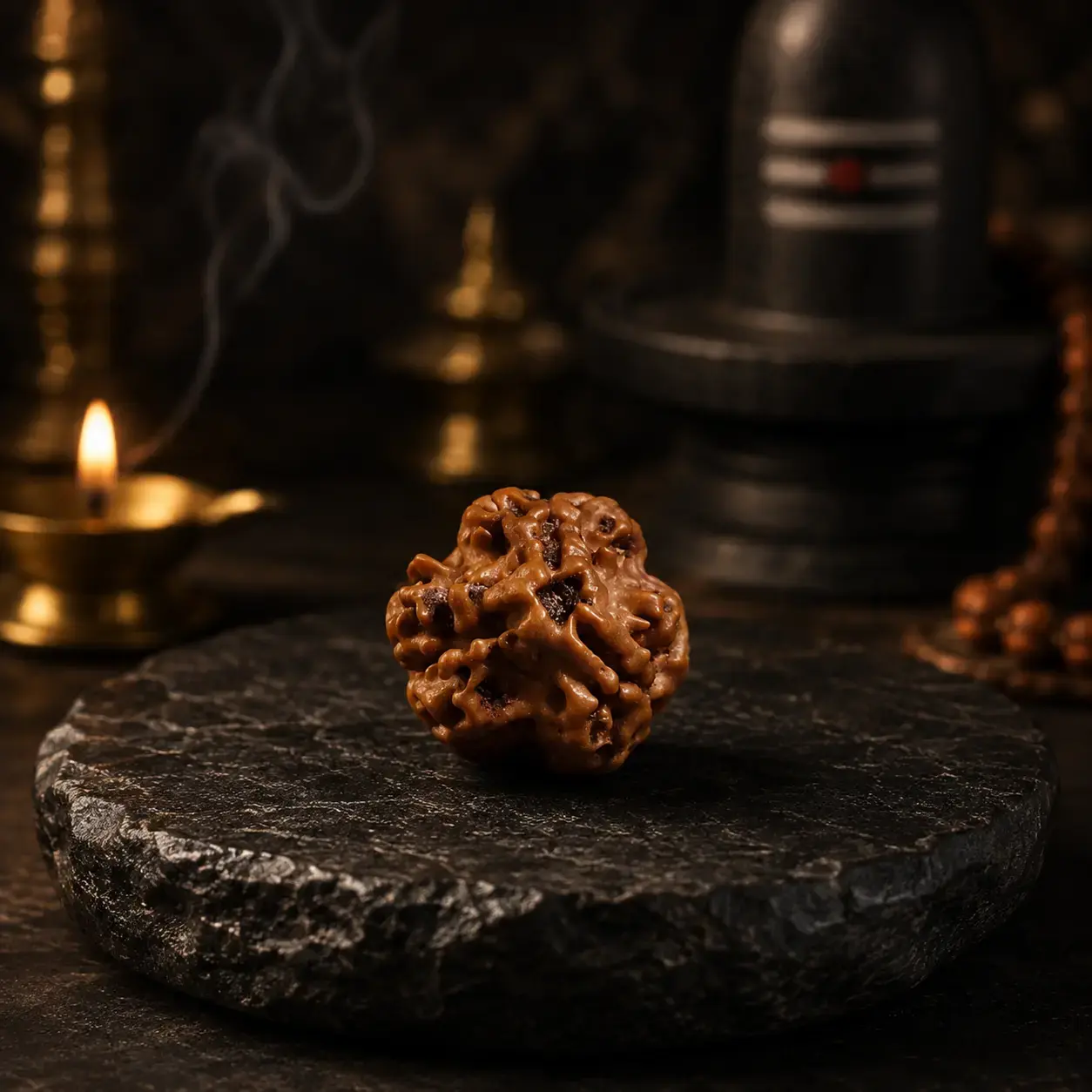
According to the Shiv Purana (Vidyeshvara Samhita, Adhyaya 25), the 3 Mukhi Rudraksha (Tri Mukhi Rudraksha) is identified with Agni (the Fire God). The scripture's description is concise and focuses on its spiritual identity and traditional significance.
Scriptural Reference:-
Scripture: Shiv Purana
Section: Vidyeshvara Samhita
Chapter: Adhyaya 25 (chapter and verse numbering may vary across editions)
Sanskrit Verse
त्रिवक्त्रस्त्वग्निरित्युक्तः स्त्रीहत्यां व्यपोहति।
IAST Transliteration
Trivaktras tv agnir ity uktaḥ strī-hatyāṁ vyapohati.
English Translation
"The Three-Mukhi Rudraksha is said to be Agni (the Fire God). It is traditionally believed to remove the sin of killing a woman (Strīhatyā)."
What the Shiv Purana Actually Says
The Shiv Purana explicitly states that:-
The 3 Mukhi Rudraksha is the manifestation of Agni Deva (the Fire God).
It is traditionally believed to remove Strīhatyā Doṣa (the sin of killing a woman).
This is the primary scriptural description given in the chapter.
What the Shiv Purana Does Not Say
The Shiv Purana does not mention that the 3 Mukhi Rudraksha:-
Removes past karma.
Burns negative karma.
Increases self-confidence.
Improves communication skills.
Removes guilt or fear.
Is associated with Mars (Mangal).
Must come from Nepal or Indonesia.
Should have a particular shape, size, or color.
These interpretations come from later Rudraksha traditions, tantric literature, astrological texts, and modern spiritual teachings—not from the Shiv Purana itself.
Physical Criterion According to the Scripture
The only physical criterion implied by the Shiv Purana is that it should have:
Three natural mukhas (three natural longitudinal clefts or faces) running from one end of the bead to the other.
The scripture does not prescribe any additional physical characteristics.
Summary
Aspect According to the Shiv Purana
Deity Agni (Fire God)
Mukhi Three natural faces
Scriptural Benefit Traditionally believed to remove Strīhatyā Shape/Size/Origin Not specified
Planet Association Mars
This presentation distinguishes the actual scriptural statement from later traditional beliefs, ensuring accuracy with respect to the Shiv Purana.
3 Mukhi Rudraksha – Complete Guide
The Sacred Rudraksha of Agni Deva (The Fire God)
The 3 Mukhi Rudraksha (Tri Mukhi Rudraksha) is a highly revered bead in the Vedic tradition. According to the Shiv Purana, it is the divine manifestation of Agni Deva, the God of Fire. Fire symbolizes purity, transformation, illumination, and the power to consume impurities. For this reason, the 3 Mukhi Rudraksha is traditionally associated with inner transformation and spiritual progress.
Scriptural Reference (Shiv Purana)
Scripture: Shiv Purana – Vidyeshvara Samhita, Adhyaya 25
Sanskrit
त्रिवक्त्रस्त्वग्निरित्युक्तः स्त्रीहत्यां व्यपोहति॥
Transliteration
Trivaktras tv agnir ity uktaḥ strī-hatyāṁ vyapohati.
Meaning
"The Three-Mukhi Rudraksha is said to be the embodiment of Agni (the Fire God). It is traditionally believed to remove the sin of Strīhatyā (the killing of a woman)."
Presiding Deity
Agni Deva (The Fire God)
Agni is revered as the divine purifier, the carrier of sacrificial offerings, and a symbol of transformation, wisdom, and spiritual illumination.
Ruling Planet
According to later Vedic astrological traditions (not stated in the Shiv Purana):
Mars (Mangal)
The 3 Mukhi Rudraksha is traditionally associated with balancing the positive qualities attributed to Mars, such as courage, determination, and vitality.
Beej Mantra
Several traditional mantras are used by different lineages. Commonly recommended mantras include:
Primary Beej Mantra
ॐ क्लीं नमः
Om Kleem Namah
Shiva Mantra
ॐ नमः शिवाय
Om Namah Shivaya
Agni Mantra
ॐ अग्निदेवाय नमः
Om Agnidevaya Namah
How to Energize the Rudraksha
Before wearing the bead:
Wake up early and take a bath.
Clean the Rudraksha with pure water.
You may optionally rinse it with cow's milk and then clean water.
Offer sandalwood paste, incense, flowers, and a lit lamp.
Meditate on Lord Shiva and Agni Deva.
Chant the chosen mantra 108 times.
Wear the Rudraksha with faith and devotion.
Best Day to Wear
Monday (dedicated to Lord Shiva)
Tuesday (traditionally associated with Mars)
Mahashivaratri
Shravan Mondays
Any auspicious day after proper worship
Best Time
Brahma Muhurta (approximately 1½ hours before sunrise), or
Morning after sunrise, following a bath and prayer.
How to Wear
The 3 Mukhi Rudraksha may be worn:
Around the neck in a silk or cotton thread.
In a silver or gold pendant.
As part of a bracelet.
Individually or combined with other Rudraksha beads.
Always wear it with respect and devotion.
Who Can Wear It?
Suitable for:
Men
Women
Students
Professionals
Spiritual seekers
Anyone wishing to wear it according to traditional beliefs
Traditional Benefits
According to traditional beliefs, the 3 Mukhi Rudraksha is believed to:
Symbolize purification and transformation.
Encourage self-confidence and determination.
Promote positive thinking.
Support emotional resilience.
Inspire courage during challenges.
Enhance focus during meditation.
Encourage spiritual growth.
Help cultivate inner strength and optimism.
These benefits are based on traditional beliefs and are not scientifically established.
Astrological Significance
In later astrological traditions, the 3 Mukhi Rudraksha is associated with:
Mars (Mangal)
Courage and determination
Vitality and enthusiasm
Confidence and motivation
These associations come from traditional astrology and are not mentioned in the Shiv Purana.
Care Instructions
Keep the Rudraksha clean and dry.
Wash occasionally with clean water.
Apply a small amount of natural oil from time to time to maintain the bead.
Avoid exposure to harsh chemicals, perfumes, soaps, or detergents.
Store it respectfully when not in use.
Authenticity
A genuine 3 Mukhi Rudraksha should have:
Three natural longitudinal mukhas (faces) extending from one end of the bead to the other.
Naturally formed surface lines.
No artificially carved or altered faces.
The Shiv Purana does not specify any requirement regarding the bead's shape, size, color, or geographical origin (such as Nepal or Indonesia).
Important Note
The spiritual significance and traditional benefits described above are based on the Shiv Purana and later Hindu traditions. They are intended for religious and cultural understanding only and should not be interpreted as medical, psychological, or scientific claims.
