

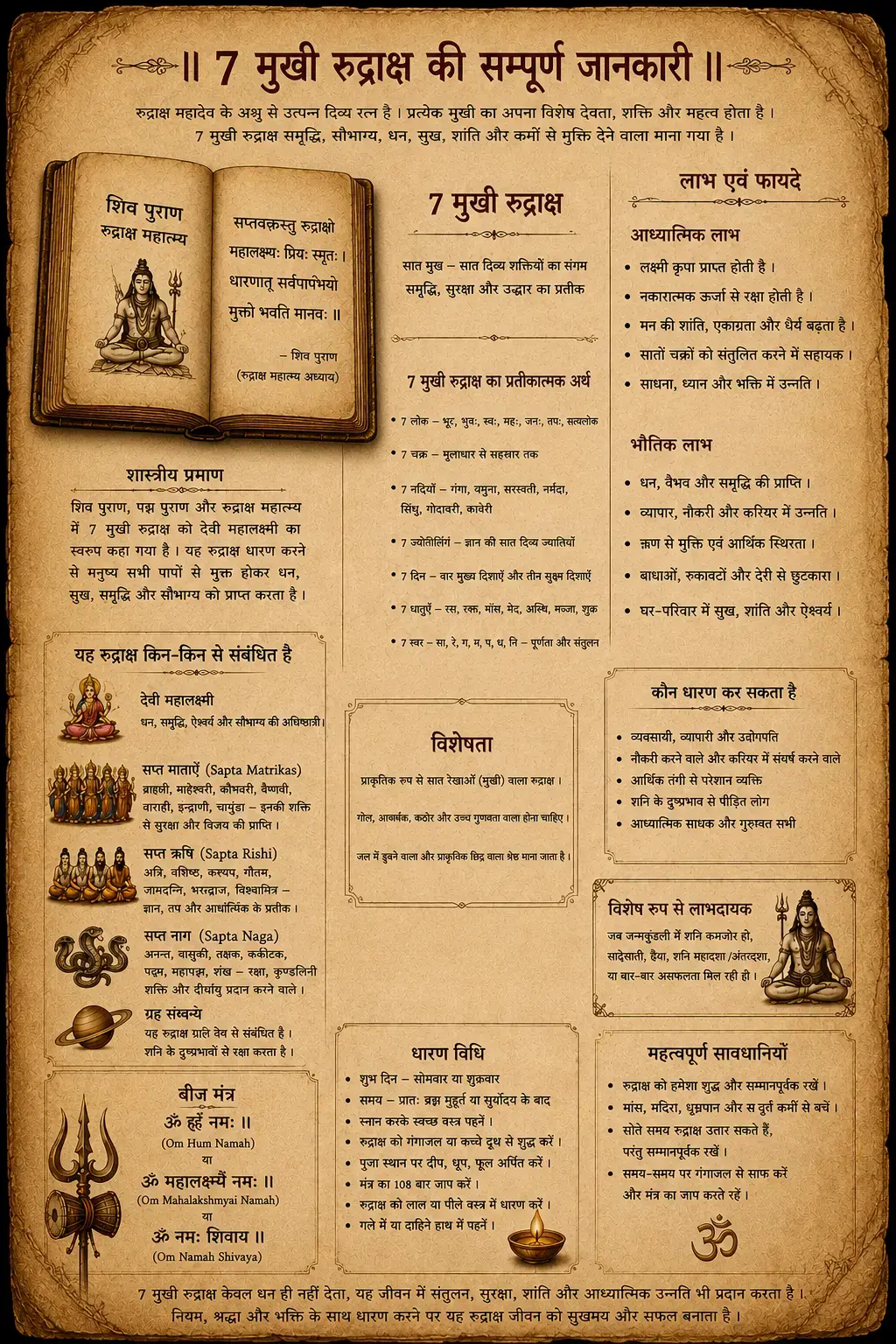
The 7 Mukhi Rudraksha (Sapta Mukhi Rudraksha) holds a significant place in the Shiva Purana, Padma Purana, and traditional Shaiva scriptures. It is primarily associated with Mahalakshmi, the Sapta Matrikas (Seven Divine Mothers), and is believed to help free a devotee from poverty, karmic burdens, and the adverse effects of Saturn (Shani).
Here is a detailed scripturally grounded explanation.
7 Mukhi Rudraksha According to the Shiva Purana
The Shiva Purana (Rudraksha Mahatmya) explains that every Rudraksha originates from the compassionate tears of Lord Shiva and possesses divine spiritual power. Regarding the 7 Mukhi Rudraksha, the scripture describes it as representing the seven divine forms and bestowing prosperity and liberation from suffering.
A commonly quoted verse from the Shiva Purana is:
सप्तवक्त्रस्तु रुद्राक्षो महालक्ष्म्याः प्रियः स्मृतः।
धारणात् सर्वपापेभ्यो मुक्तो भवति मानवः॥
Meaning:
"The seven-faced Rudraksha is dear to Goddess Mahalakshmi. One who wears it becomes free from sins and gradually attains prosperity and happiness."
This verse emphasizes that the bead is particularly connected with wealth, abundance, and the removal of misfortune through divine grace.
Association with Goddess Mahalakshmi
Ancient scriptures describe the 7 Mukhi Rudraksha as the embodiment of Goddess Mahalakshmi, the deity of wealth, fortune, and auspiciousness.
It is believed to:
Remove financial obstacles.
Increase prosperity.
Bring stability in business and career.
Bless the wearer with abundance and contentment.
Attract opportunities for growth.
Unlike merely material wealth, the scriptures indicate that Mahalakshmi also grants:
Spiritual wealth
Peace of mind
Good fortune
Family harmony
Divine grace
Representation of the Sapta Matrikas
The seven faces are traditionally associated with the Sapta Matrikas (Seven Divine Mothers):
Brahmani
Maheshwari
Kaumari
Vaishnavi
Varahi
Indrani
Chamunda
The combined blessings of these divine mothers are believed to provide:
Protection from negative energies
Courage
Wisdom
Prosperity
Spiritual strength
Victory over obstacles
Connection with the Seven Nagas
According to traditional Shaiva beliefs, the seven faces also symbolize the Sapta Nagas (Seven Divine Serpents):
Ananta
Vasuki
Takshaka
Karkotaka
Padma
Mahapadma
Shankha
These serpent deities symbolize:
Protection
Hidden spiritual power
Kundalini energy
Longevity
Freedom from fear
Connection with Lord Shani
Although the Shiva Purana does not explicitly state that the 7 Mukhi Rudraksha is ruled by Saturn, later astrological traditions and texts such as the Padma Purana and works on Jyotisha (Vedic astrology) associate it with Shani (Saturn).
Because of this association, it is traditionally believed to help reduce the difficulties arising from:
Shani Mahadasha
Sade Sati
Dhaiya
Delays
Financial struggles
Repeated failures
Karmic hardships
The Rudraksha is regarded as a spiritual aid rather than a guaranteed astrological remedy.
Symbolism of the Seven Faces
The seven mukhis are also interpreted as representing:
Seven Sages (Sapta Rishis)
Seven Sacred Rivers
Seven Continents
Seven Chakras
Seven Lokas (higher worlds)
Seven Flames of Spiritual Knowledge
Seven Forms of Divine Energy
This symbolism reflects completeness, balance, and spiritual evolution.
Spiritual Benefits Mentioned in Tradition
According to Shaiva traditions, wearing the 7 Mukhi Rudraksha with devotion may help the wearer:
Remove accumulated negative karma.
Increase devotion to Lord Shiva.
Develop patience and perseverance.
Gain emotional stability.
Overcome fear and insecurity.
Progress toward spiritual growth.
Cultivate detachment from excessive material desires while using wealth responsibly.
Material Benefits Described in Traditional Belief
Traditional scriptures and commentaries attribute the following benefits to the 7 Mukhi Rudraksha:
Attracts prosperity and abundance.
Removes poverty and financial instability.
Supports success in business and profession.
Improves confidence in decision-making.
Brings family happiness.
Encourages a peaceful and balanced life.
Helps overcome obstacles and delays.
These are traditional spiritual beliefs and should not be understood as guaranteed outcomes.
Beej Mantra
The commonly accepted Beej Mantra is:
॥ ॐ हुं नमः ॥
Om Hum Namah
Another widely practiced mantra is:
॥ ॐ महालक्ष्म्यै नमः ॥
Om Mahalakshmyai Namah
Many devotees also chant the universal Shiva mantra while wearing any Rudraksha:
॥ ॐ नमः शिवाय ॥
Om Namah Shivaya
Best Day to Wear
Traditionally:
Monday (dedicated to Lord Shiva)
Friday (dedicated to Goddess Lakshmi)
Many practitioners also choose an auspicious muhurta after proper purification and prayer.
Scriptural Essence
The collective teachings of the Shiva Purana, Padma Purana, and traditional Shaiva literature present the 7 Mukhi Rudraksha as a sacred bead that embodies the blessings of Lord Shiva, Goddess Mahalakshmi, the Sapta Matrikas, and the Sapta Nagas. It is revered for promoting prosperity, protection, spiritual progress, and relief from suffering while encouraging the wearer to live a righteous and devoted life.
Note on scriptural accuracy: Some verses commonly shared online about Rudraksha are later traditional quotations rather than verbatim passages from the critical editions of the Shiva Purana. When citing scripture in books or videos, it is best to distinguish between direct Puranic verses and traditional Shaiva interpretations.
